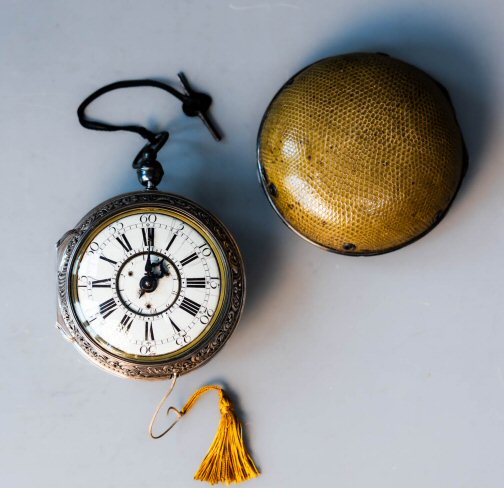
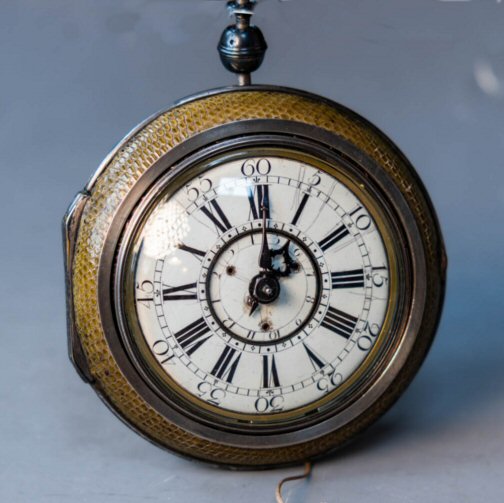
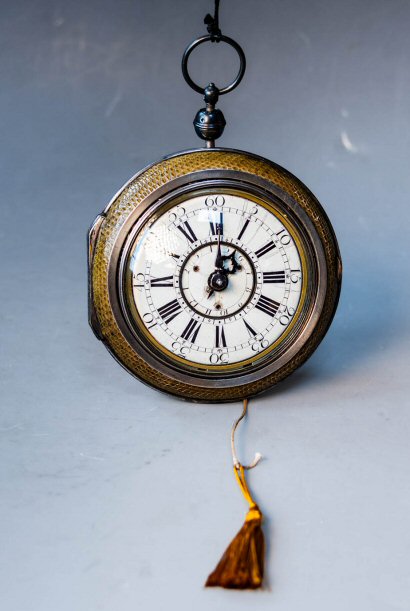
This timepiece is a "coach watch"—also known as a carriage watch or 'clockwatch'—manufactured around 1780.
It is signed by the maker, Melly à Paris. This type of timepiece served as a portable travel clock designed to withstand the vibrations of carriage travel, while also functioning as a prestigious status symbol.
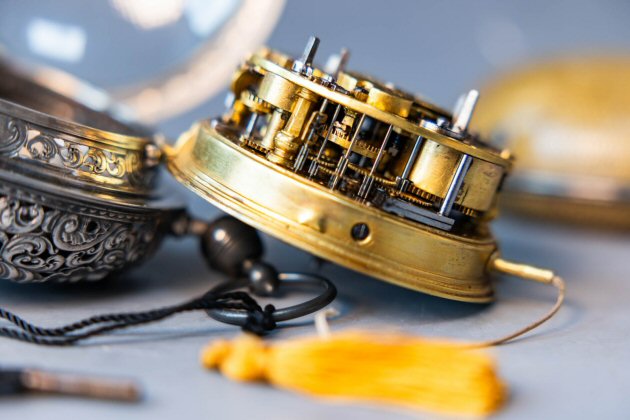
The watch is fitted with a verge escapement, the classic and dominant escapement mechanism of the period.
Striking mechanism: The movement features a complex striking system that automatically sounds the hours and quarters on a bell. Repeating function: In addition to the automatic striking, it includes a repeating mechanism. This allowed the owner to manually trigger the striking of the hours and quarters at any time—"on demand"—making it ideal for hearing the time in the dark.
The watch also incorporates an alarm mechanism.
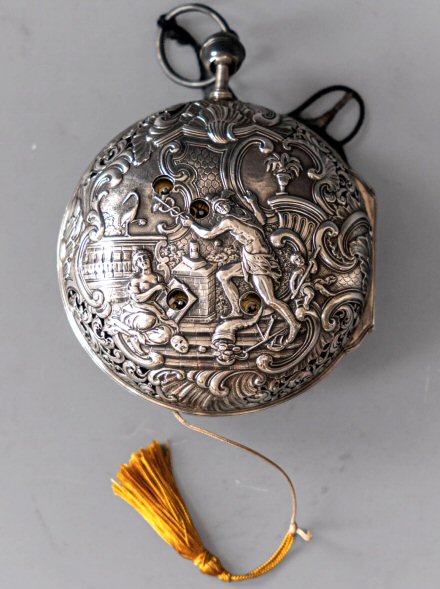
Case: The inner case is made of silver and decorated using the repoussé technique (a method in which the metal is hammered into relief from the inside). The decoration features, among other elements, a detailed depiction of Hermes (the Greek god of trade, travelers, and roads—a highly fitting symbol for a travel watch).
The outer case: To protect the precious silver case and the movement from scratches and knocks during travel, the exterior is covered in shagreen (stingray skin). This material was highly popular for luxury goods in the 18th century due to its unique, granular texture and extreme durability. Dimensions: Outer case diameter: 14 cm (significantly larger than a standard pocket watch, typical of coach watches to ensure readability and accommodate a loud bell). Height/Thickness: 6.5 cm. You can examine similar 18th-century timepieces in the British Museum's online database.
The inner case is crafted from silver and decorated using the repoussé technique (a method in which the metal is hammered into relief from the inside). The decoration features, among other things, a detailed depiction of Hermes (the Greek god of trade, travelers, and roads—a highly fitting symbol for a travel watch). The outer case: To protect the precious silver case and the movement from scratches and knocks during travel, the exterior is covered in shagreen (stingray skin). This material was highly popular for luxury goods in the 18th century due to its unique, granular texture and extreme durability.
Dimensions: Outer case diameter: 14 cm (significantly larger than a standard pocket watch), typical of carriage watches to ensure good readability and accommodate a loud bell. Height/Thickness: 6.5 cm.
You can examine similar 18th-century timepieces in the British Museum's online database.
About the maker, consult Tardy, p. 453.
*******************************************
Coach Watch, ook bekend als een koetshorloge of Clockwatch, vervaardigd rond 1780. Het is gesigneerd door de maker Melly à Paris.
Dit type uurwerk fungeerde als een draagbare reisklok, ontworpen om de trillingen van reizen per koets te weerstaan, maar was tegelijkertijd een kostbaar statussymbool.
Het horloge is uitgerust met een spillegang (verge escapement), het klassieke en dominante echappement uit deze periode. Slagwerk (Striking mechanism): Het uurwerk bezit een complex slagwerk systeem dat elk kwartier automatisch de uren en kwartieren slaat op een bel. Repeteerfunctie: Naast het automatische slagwerk beschikt het over een repetitiemechanisme. Hiermee kon de eigenaar de uren en kwartieren op elk gewenst moment handmatig laten terugslaan, 'op aanvraag', wat ideaal was om in het donker de tijd te horen. Het horloge bevat tevens een geïntegreerd wekkermechanisme.
Kast van het uurwerk (Case) De binnenkast is vervaardigd uit zilver en gedecoreerd in de repoussé-techniek (een techniek waarbij het metaal van binnenuit in reliëf is geklopt). De decoratie toont onder andere een gedetailleerde afbeelding van Hermes (de Griekse god van de handel, reizigers en wegen—een zeer toepasselijk symbool voor een reishorloge.
De buitenkast: Om de kostbare zilveren kast en het uurwerk te beschermen tegen krassen en stoten tijdens het reizen, is de buitenzijde bekleed met roggehuid (stingray skin / shagreen). Dit materiaal was in de 18e eeuw zeer populair voor luxeartikelen vanwege de unieke, korrelige textuur en extreme duurzaamheid.
Afmetingen: Diameter buitenkast: 14 cm (aanzienlijk groter dan een standaard zakhorloge), typerend voor koetshorloges zodat ze goed leesbaar waren en een luide bel konden huisvesten). Hoogte / Dikte: 6,5 cm.U kunt soortgelijke 18e-eeuwse uurwerken bestuderen in de online database van het British Museum.
De binnenkast is vervaardigd uit zilver en gedecoreerd in de repoussé-techniek (een techniek waarbij het metaal van binnenuit in reliëf is geklopt). De decoratie toont onder andere een gedetailleerde afbeelding van Hermes (de Griekse god van de handel, reizigers en wegen—een zeer toepasselijk symbool voor een reishorlogeDe buitenkast: Om de kostbare zilveren kast en het uurwerk te beschermen tegen krassen en stoten tijdens het reizen, is de buitenzijde bekleed met roggehuid (stingray skin / shagreen). Dit materiaal was in de 18e eeuw zeer populair voor luxeartikelen vanwege de unieke, korrelige textuur en extreme duurzaamheid. Afmetingen: Diameter buitenkast: 14 cm (aanzienlijk groter dan een standaard zakhorloge), typerend voor koetshorloges zodat ze goed leesbaar waren en een luide bel konden huisvesten). Hoogte / Dikte: 6,5 cm.
U kunt soortgelijke 18e-eeuwse uurwerken bestuderen in de online database van het British Museum.
Tevens Tardy raadplegen, Melly, p. 453.
Price on request.
****************************************