|
|
 |
 |
|
|
You'r in Appendix.
Back
to main page.
|
More
Captain's watches
with Multiple
Tide table
Signed:
•
Jan Janz Boekels. Hage
•
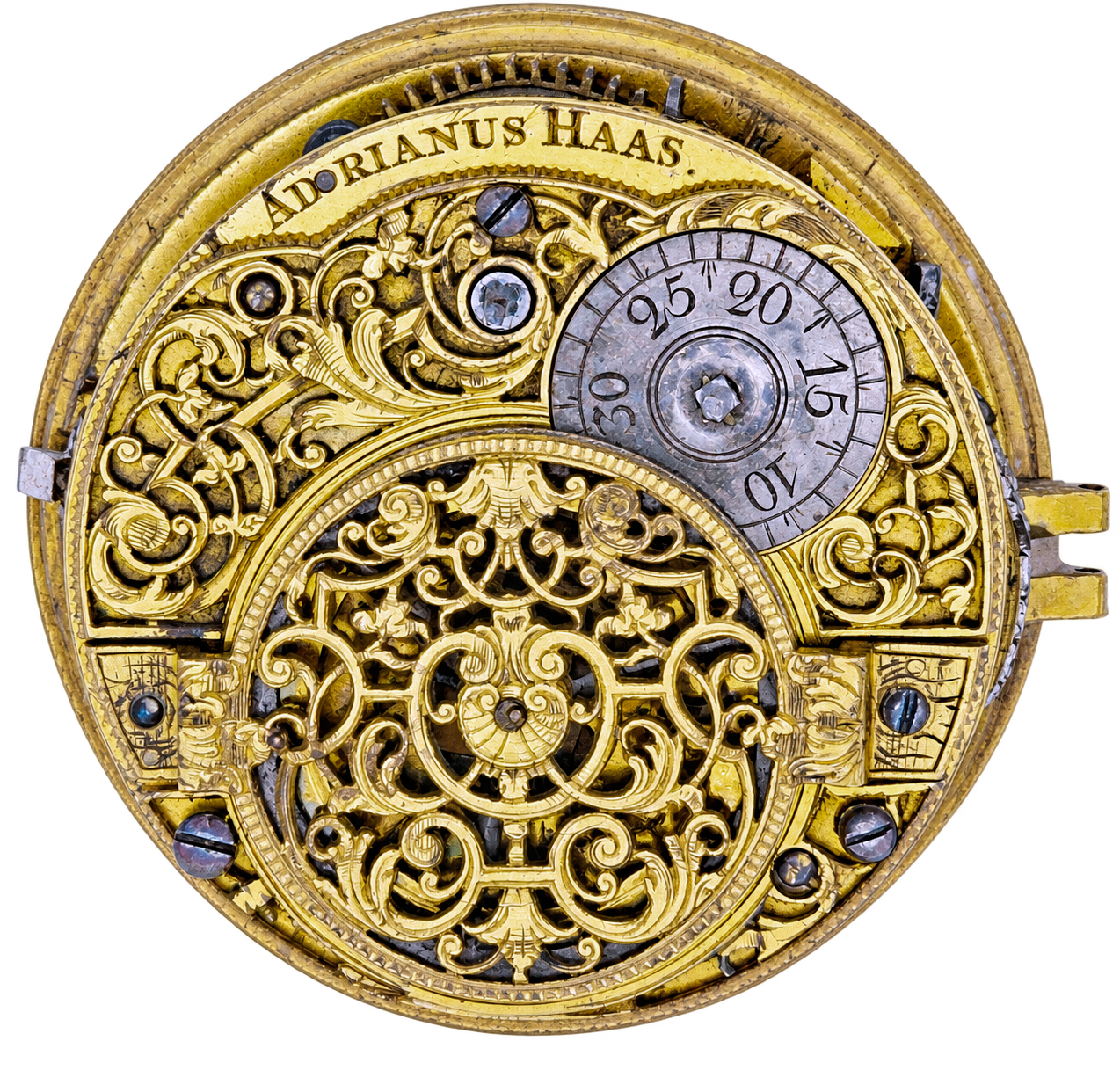
Adrianus Haas.
|
|
 |
|
|
|
|
TABLE OF CONTENTS
Jan
Janz Boekels c.1625.
Adrianus
Haas, early 18th c.
NOTES.
You'r in Appendix.
Back
to main page.
It is presumed that multiple captain's watches
were made during the 17th and 18th centuries, by both Dutch and
non-Dutch makers.
This appendix describes two additional
Dutch captain's watches.
|
|
 Jan
Janz Boekels c.1625 |
|
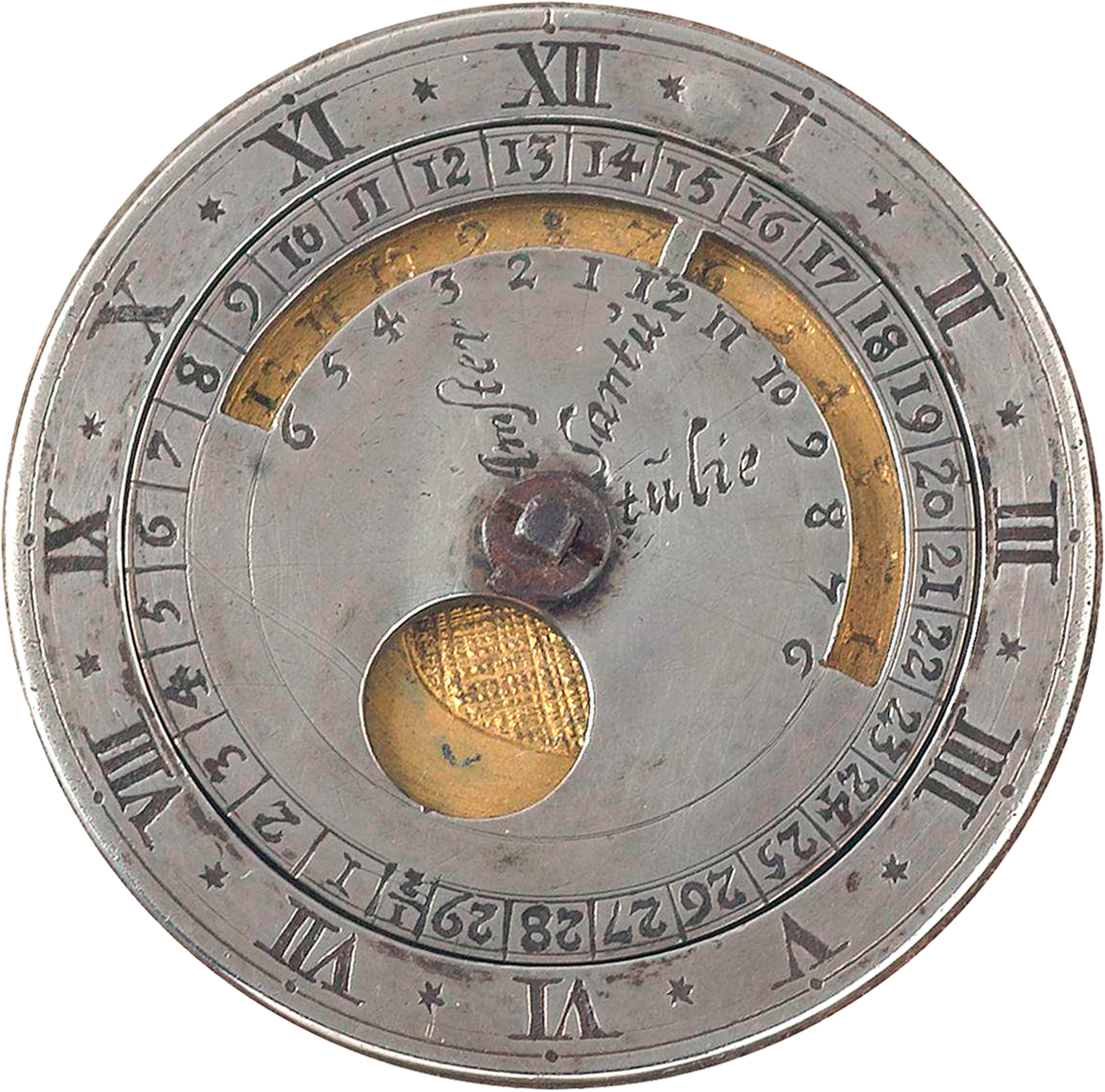
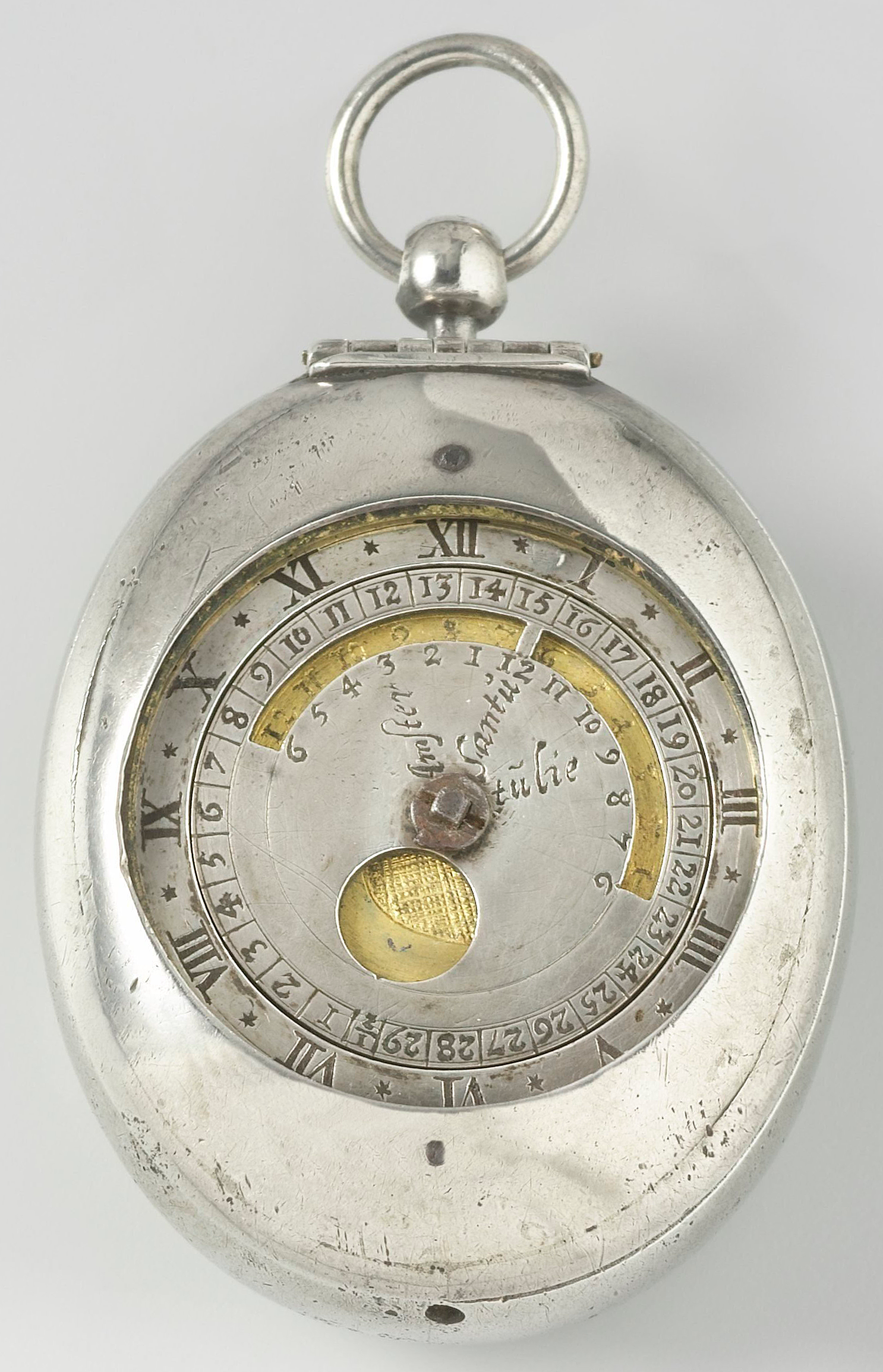
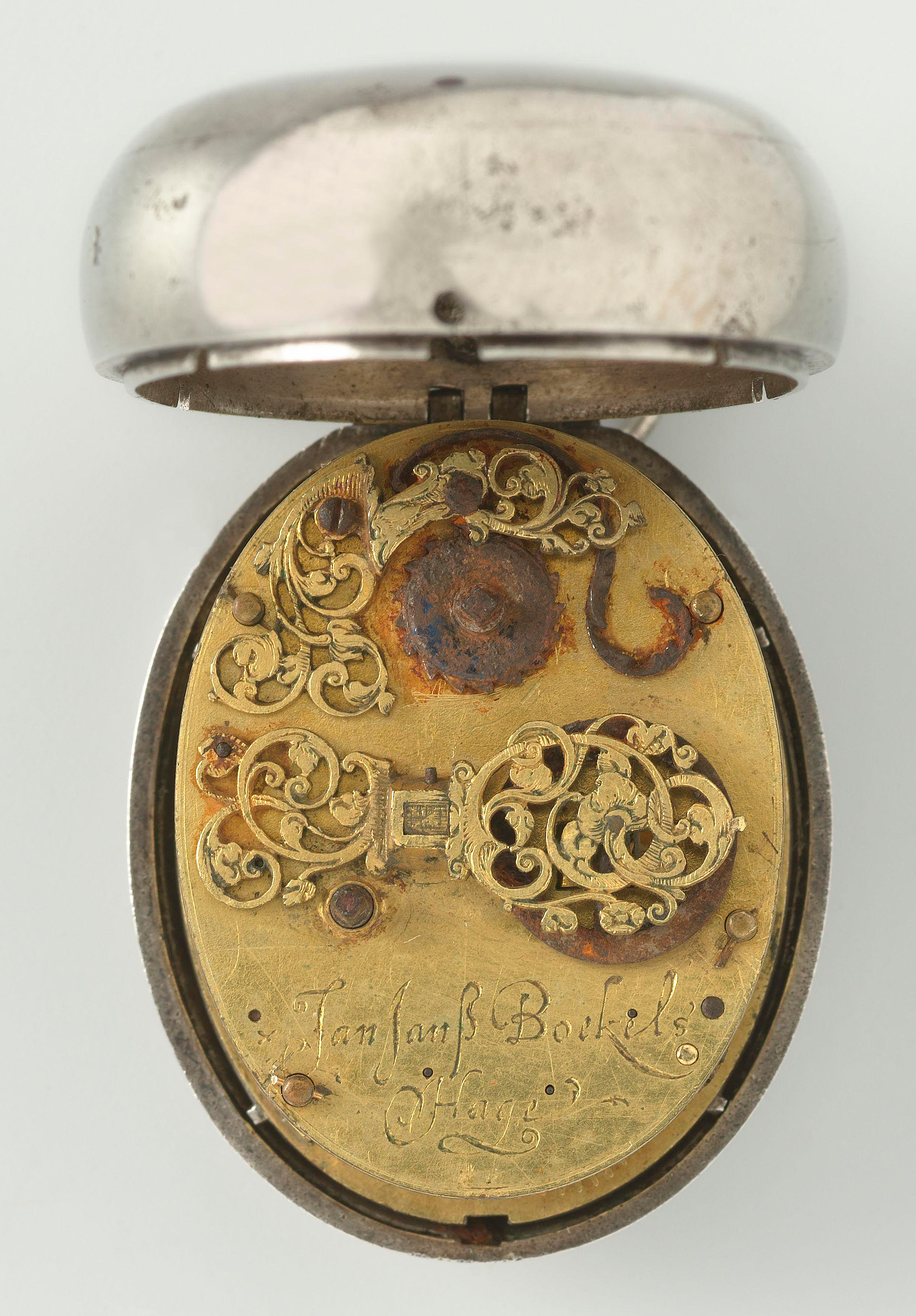
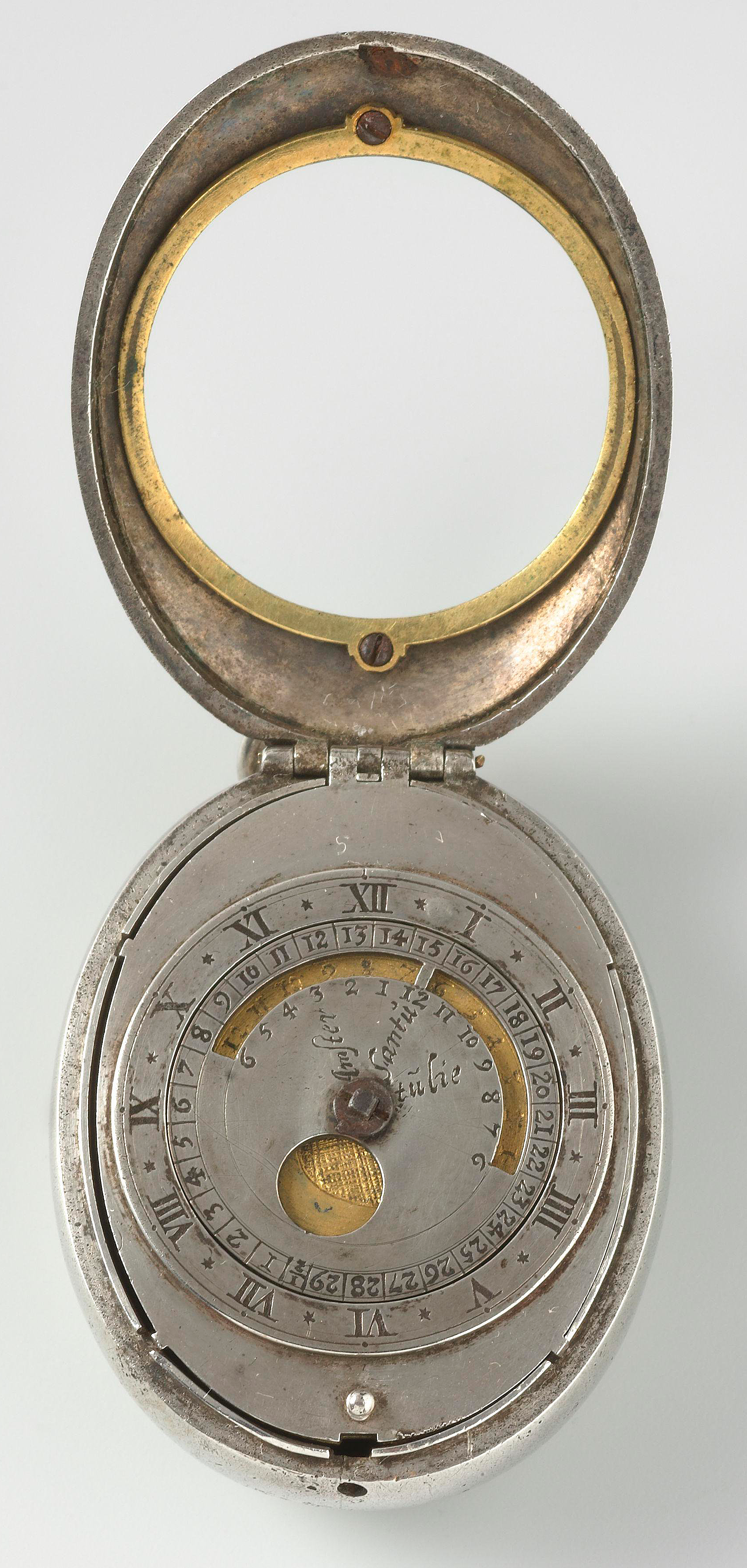
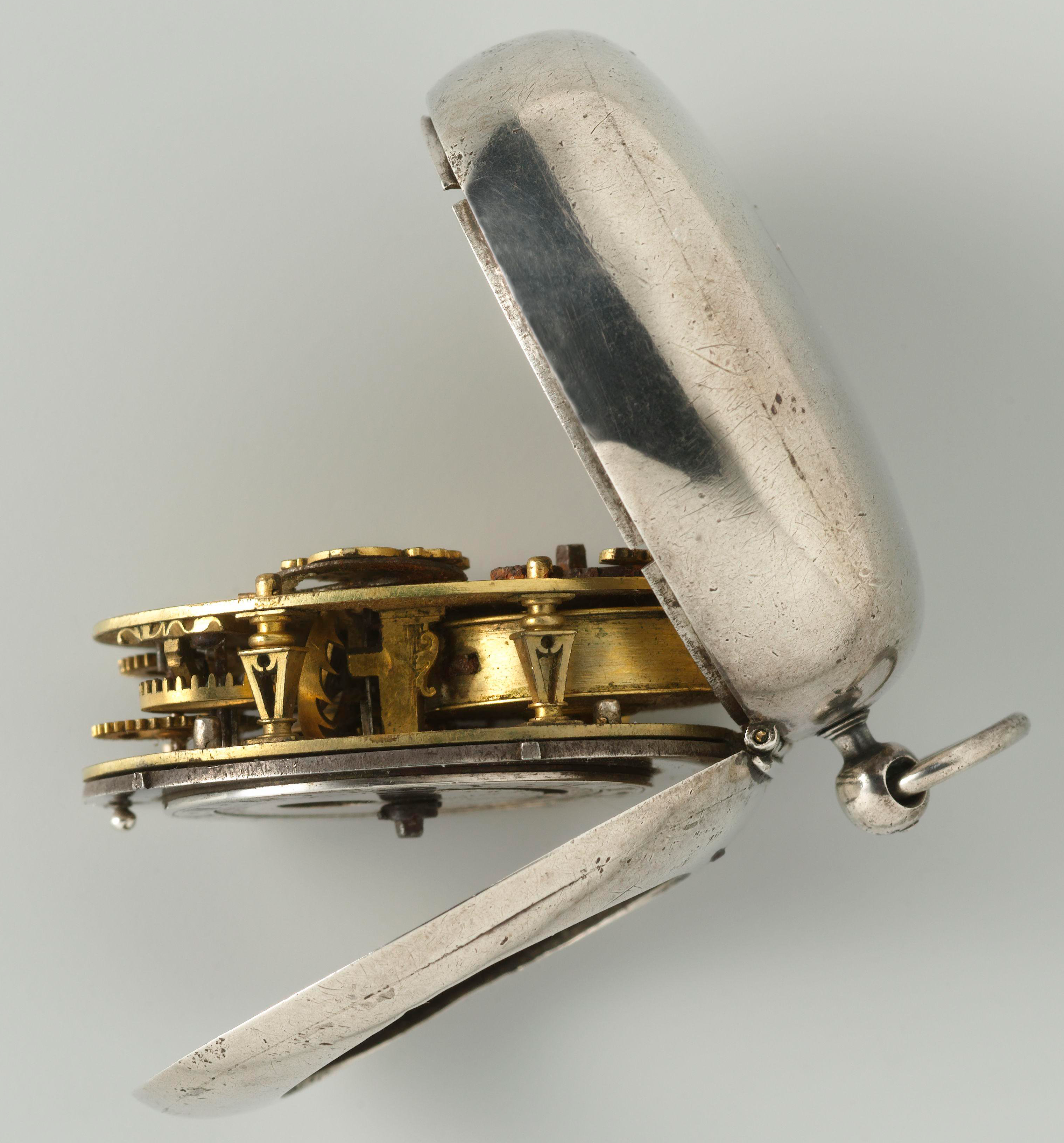
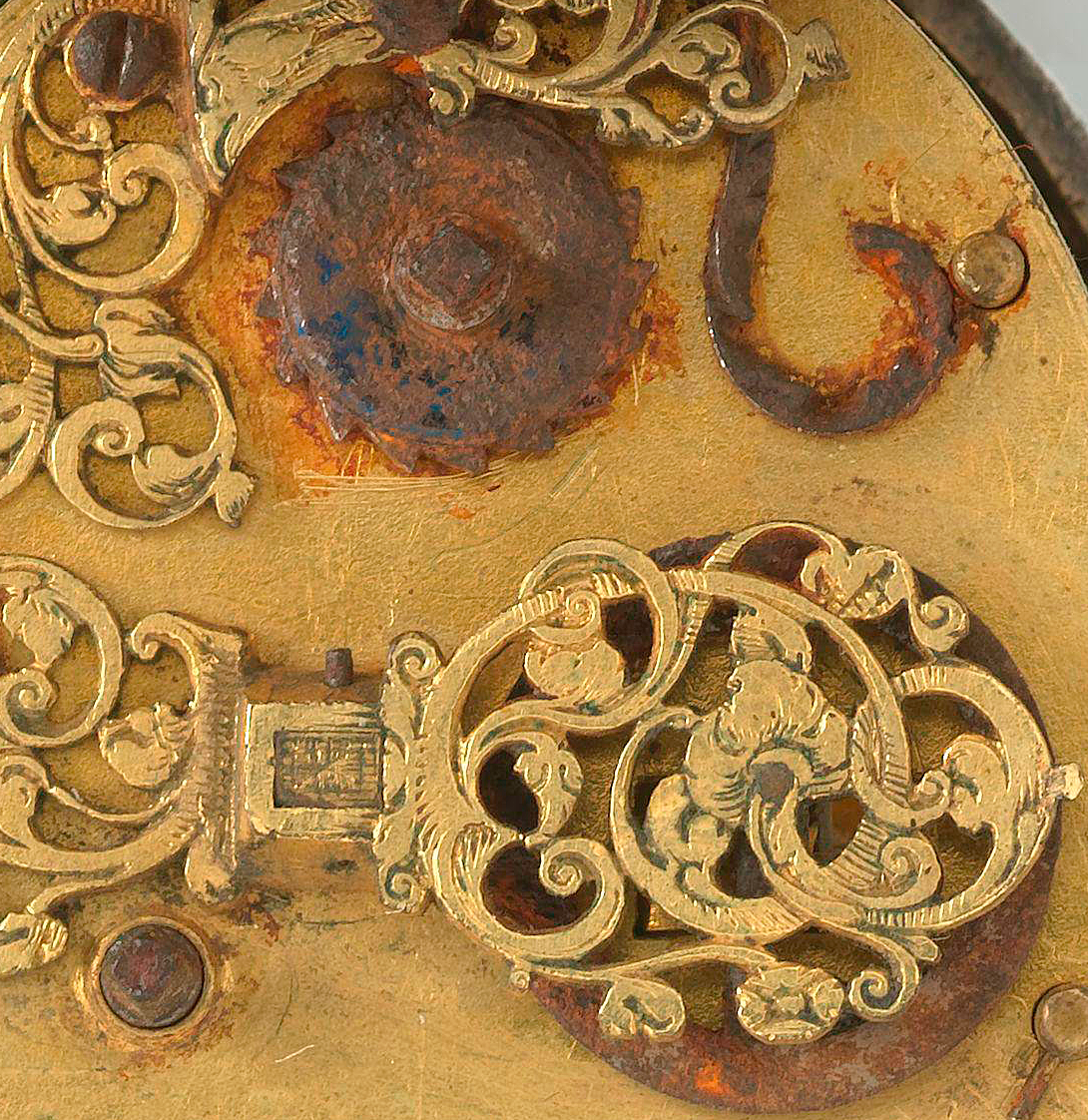
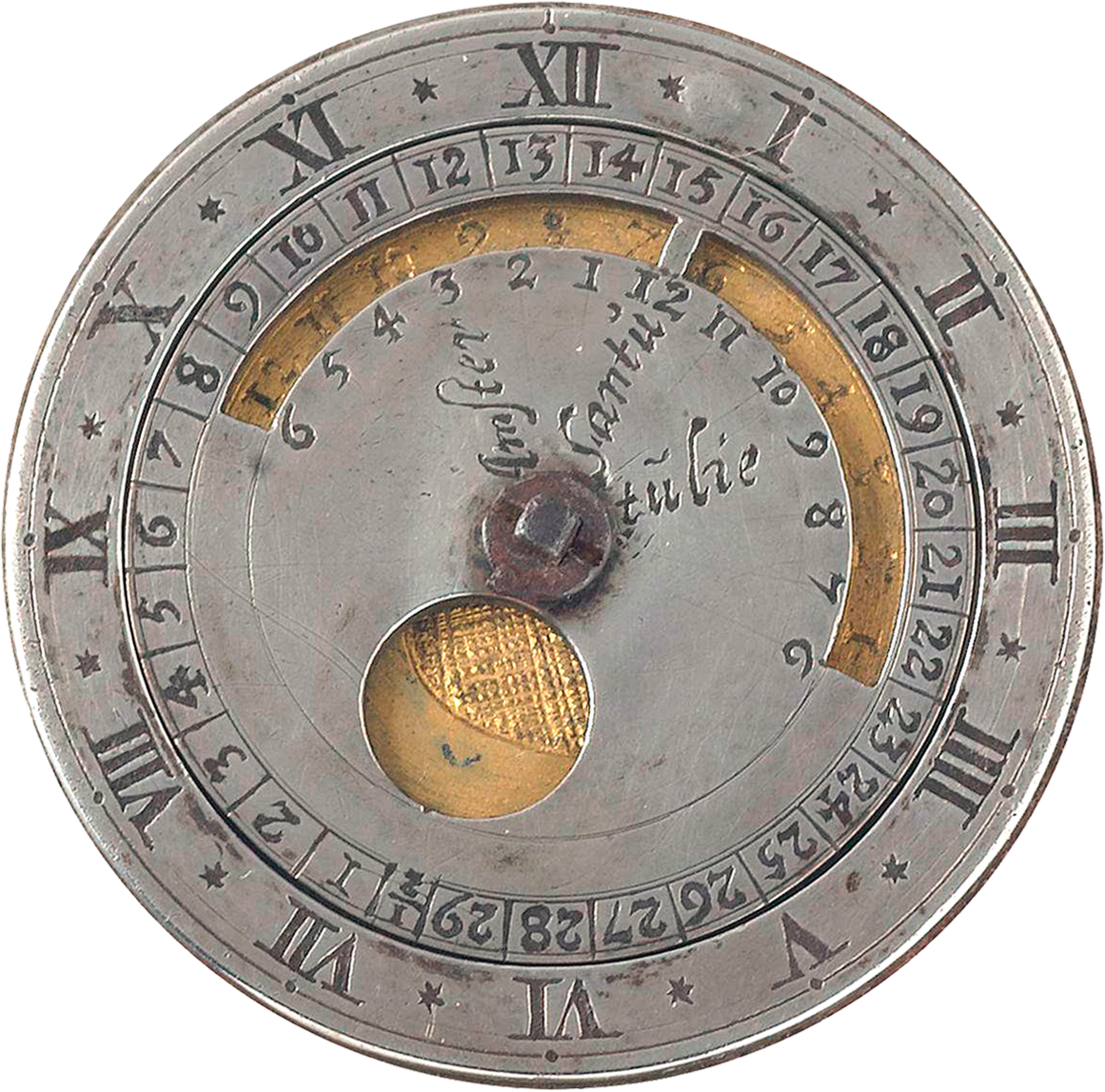
A Dutch silver and partly gilt
oval puritan watch, the fire gilded movement with fusee and
pre-hairspring hogs bristle regulation verge escapement, signed:
Jan Janz Boekels Hage1
Collection Rijksmuseum.
Dimensions:
40 x 32 mm.
The pointer of the hour hand is missing.
It features an engraved silver dial, displaying the high tide
times for the following three locations:
•
Amster
Amsterdam
•
Santû
Santv Santvoort
•
tûlie
tvlie
't Vlie (View
chart)
Unfortunately, no pictures of the mechanism behind the dial are
available. This may be because the corroded locking pin securing the
hour hand is difficult to remove, preventing the movement from being
disassembled.
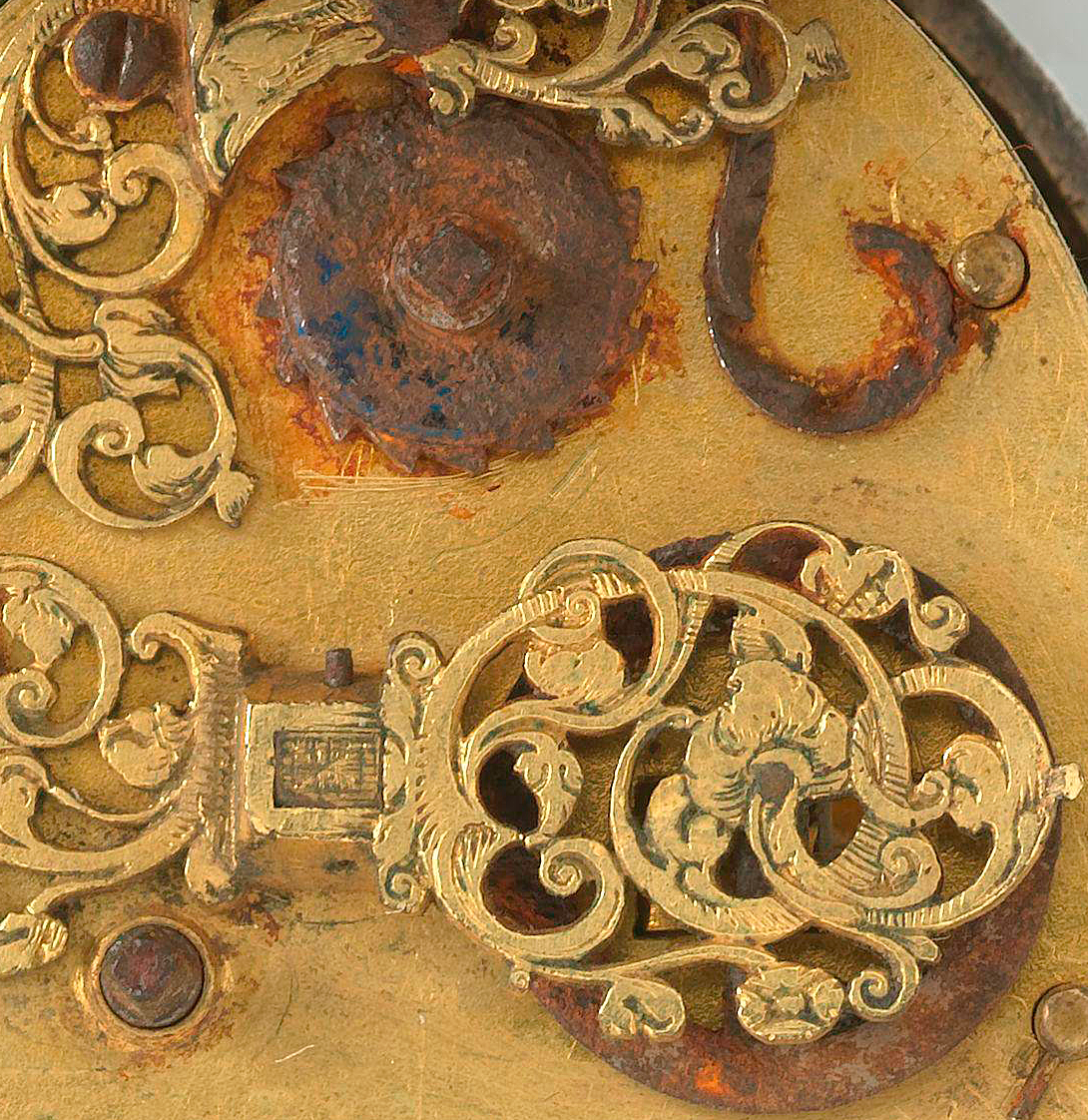
Unlike the gold Nauta1
watch, the extensive corrosion of this watch’s components suggests
that it may have been used in offshore conditions.
Click
here to view an unharmed, almost identical, movement by the same maker.
Jan
Jansz Boeckels the Younger1.
A mennonite watchmaker active in Haarlem
and The Hague, during the first half of the seventeenth century;
born c. 1590? died by 1651.
|
|
|
Adrianus
HAAS early 18th c. |
|
Courtesy: SMAT
Pictures AI retouched
|
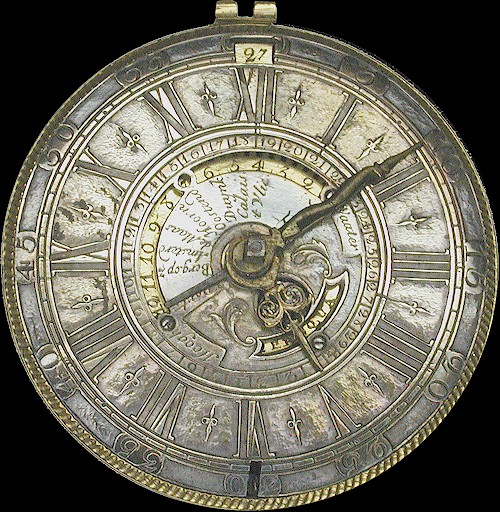
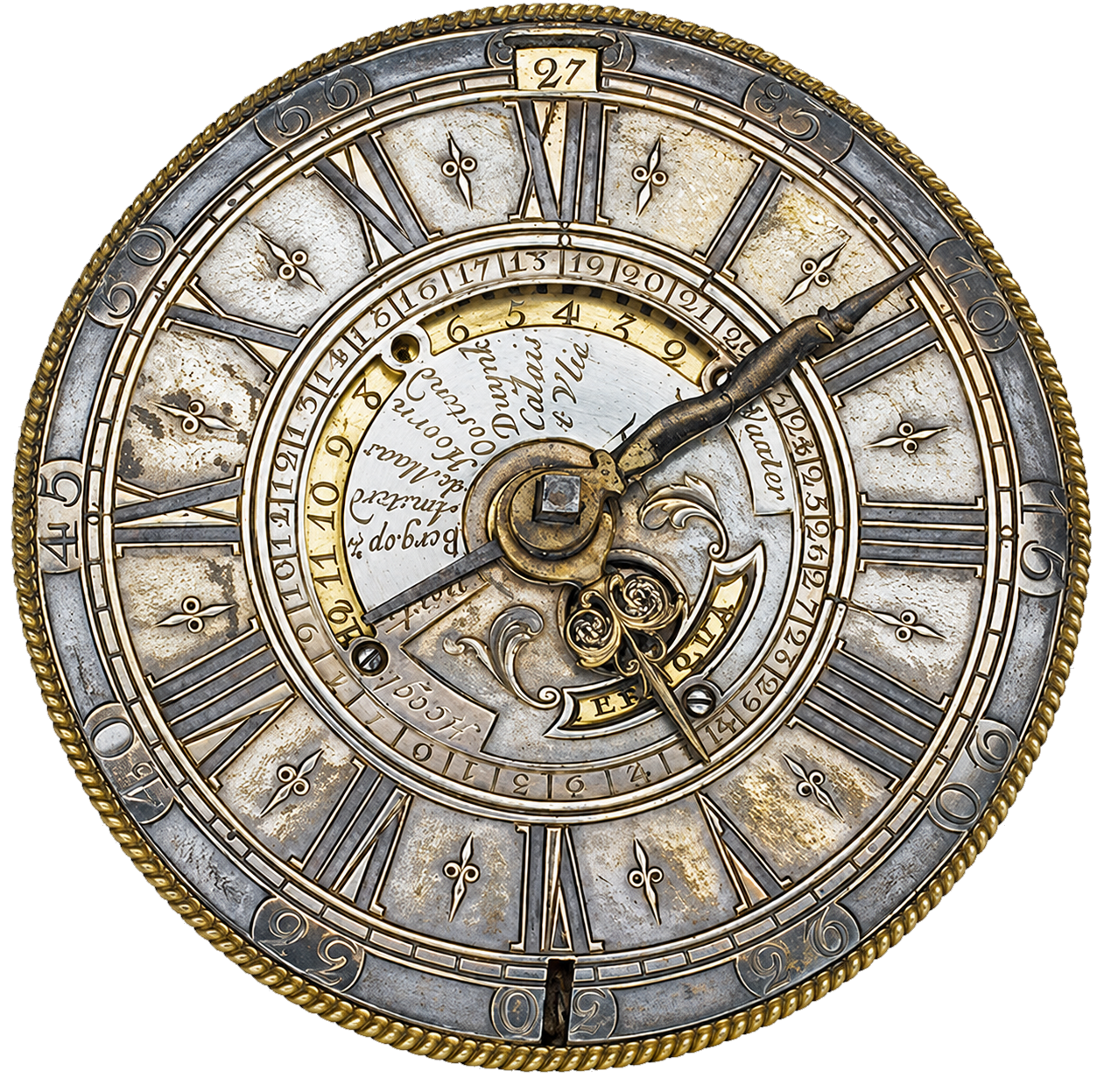
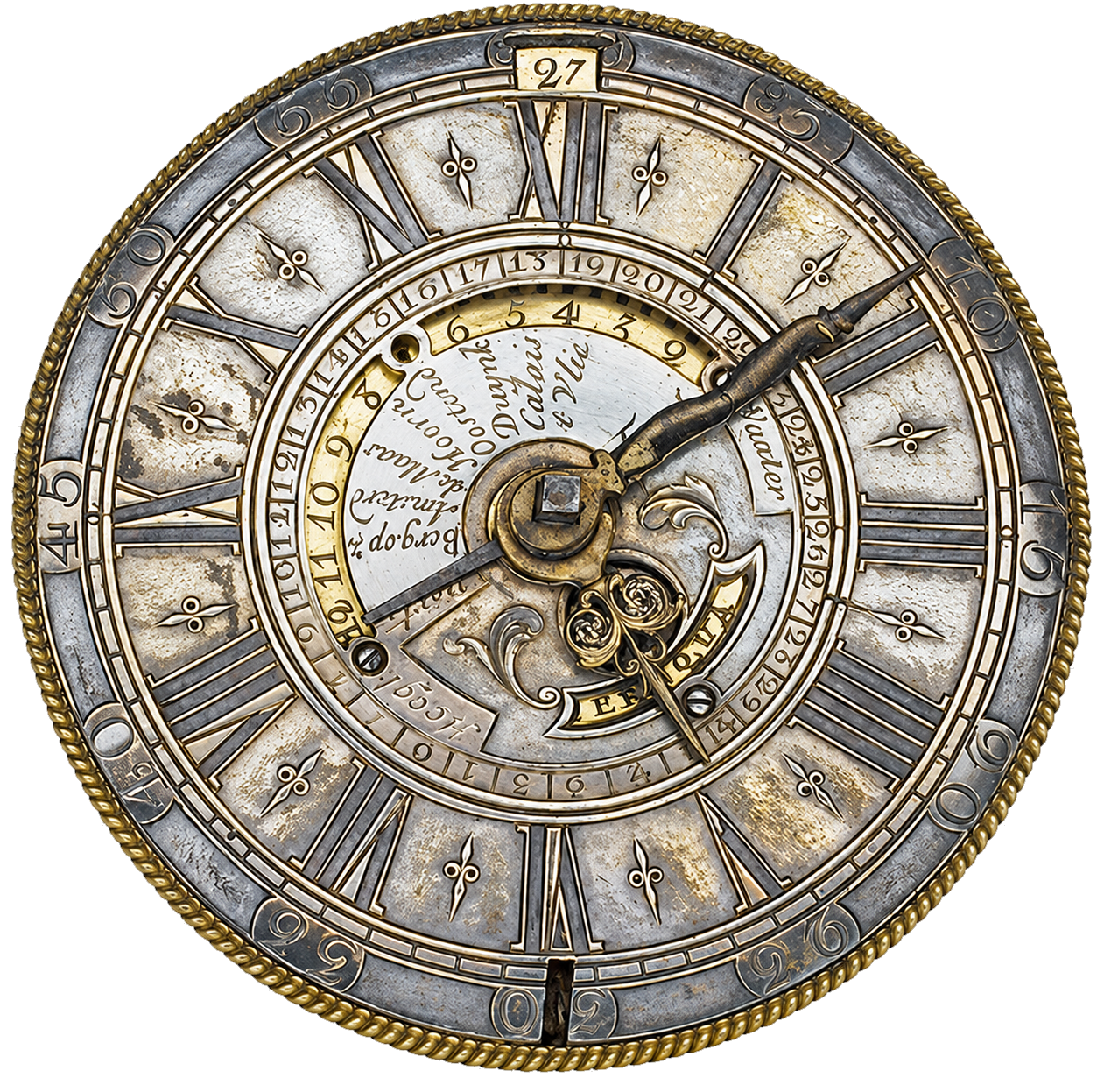
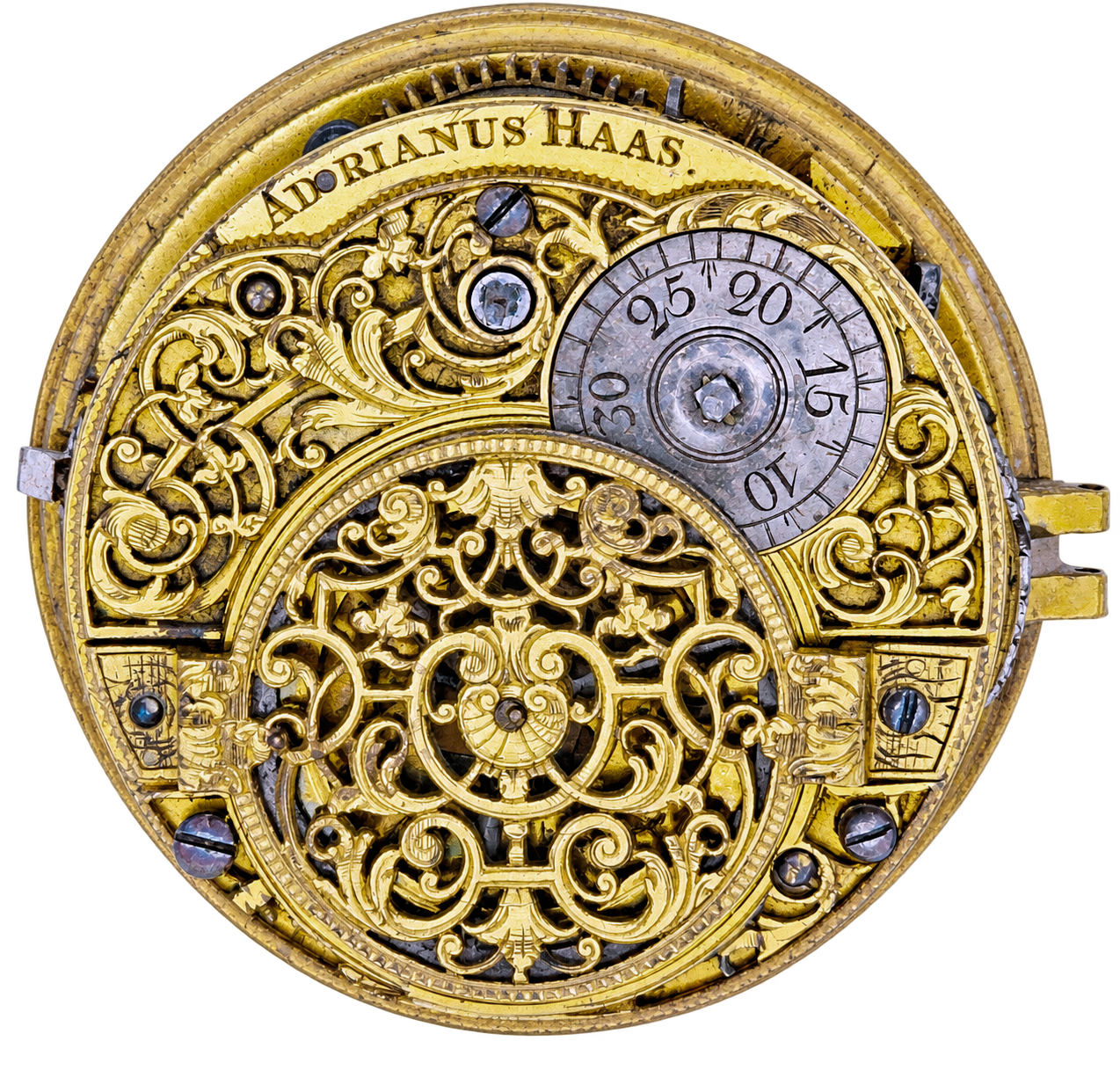
The Dutch foundation 'SMAT'* owns
a fine early 18th c. Dutch captain’s watch movement signed:
Adrianus Haas.
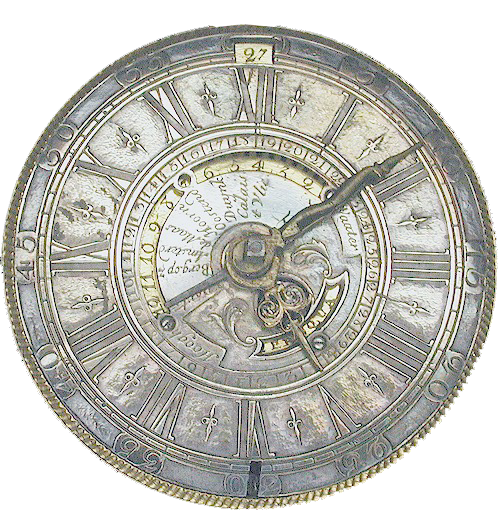
It
features a silver champlevé dial, displaying the high
tide times for the following locations:
•
Dordrecht (Dort),
•
Bergen op Zoom,
•
Amsterdam,
•
the Meuse (de Maas),
•
Hoorn,
•
Ostend,
•
Dunkirk (Duynkerk),
•
Calais,
•
t Vlie,
•
Texel.
The
watch is fitted with an hour hand (not original), a minute hand, and
a hand indicating the lunar day. The dial also features apertures
displaying the date and the phases of the Moon, the latter
represented both pictorially and textually, in this case indicating
the first quarter.
| VOL:MAA |
full moon |
| LAA:QUA |
last quarter |
| NIE:MAA |
new moon |
| EER:QUA |
first quarter |
* The SMAT
horological collection resided in the Dutch Gold, Silver
and Clock
Museum2
from 1953 till 2013.
|
NOTES |
|
|
|
|
1)
Jan
Jansz Boeckels the Younger.
Haarlem and The Hague, active first
half of the seventeenth century; died by 1651.
Jan Jansz Boeckels was a Mennonite watchmaker active in Haarlem and
later in The Hague during the first half of the seventeenth century.
He belonged to a family of watchmakers and is documented in
connection with Haarlem from the early seventeenth century.
Following a legal dispute in 1625, in which he was acquitted of
serious allegations made by his wife, Sara Adriaens, he left Haarlem
and established himself in The Hague, where his presence is
documented in 1627.
Boeckels produced technically
sophisticated watches, including examples with lunar and tidal
indications. A clock-watch attributed to him, dated circa 1625–1635,
is preserved in the British Museum; an oval silver watch signed *Jan
Jansz Boekels / Hage*, incorporating calendar and tidal indications,
is in the Rijksmuseum. His former apprentice, Jacob van Caschbeeck,
subsequently went to London with Sara Adriaens, and the couple's
marriage was dissolved in 1632.
Boeckels also appears to have
had artistic interests and probably visited London. His grandson,
the engraver Cornelis van Dalen II, produced an engraving after a
drawing by Jan inspired by a painting by Peter Paul Rubens. An
inventory and sale of Boeckels's estate in 1651 establish that he
had died by that date. His precise birth date remains unknown, and
the attribution of some early watches to him or his father, Jan
Jansz Boeckels the Elder, remains uncertain.
A watch of his
father resides in the
MET musuem
|
| |
|
2) ‘Dutch
Gold, Silver and Clock Museum’
The Amsterdam Museum of
Timekeeping (1901) and the Dutch Guarantee Museum in Utrecht (1938)
merged in 1953 to form the Dutch Gold, Silver and Clock Museum.
Initially housed in the Catharijne Convent in Utrecht, the museum
eventually outgrew its premises and relocated in 1970, making way
for the Museum of Music Boxes and Street Organs.
In 1978,
the museum moved to Schoonhoven, a town whose reputation as the
Silver City made it a fitting home for the collection. In 2011, the
museum was renamed the Dutch Silver Museum Schoonhoven.
By
2013, the SMAT Foundation’s horological collection was no longer on
loan to the museum.
|
| |
|
|
Acknowledgments |
|
|
Maritime Museum Rotterdam
www.maritiemmuseum.nl
|
| |
|
|
|
|
This article is subject to
ongoing updates. |
|
|
| |
| |
|
|
| |
| |
| |
| |
| |
| |
| |
| |
| |
| |
| |
| |
| |
| |
| |
| |
| |
| |
| |